Knowing 7 × 8 and knowing it in one second are different skills.

Every study app checks whether your child got it right. Right is the easy half. Nneola starts a clock when the question appears and stops it at their first keystroke, then keeps drilling until the answer arrives before they have finished reading it.

Free. Works with no AI at all. No ads.
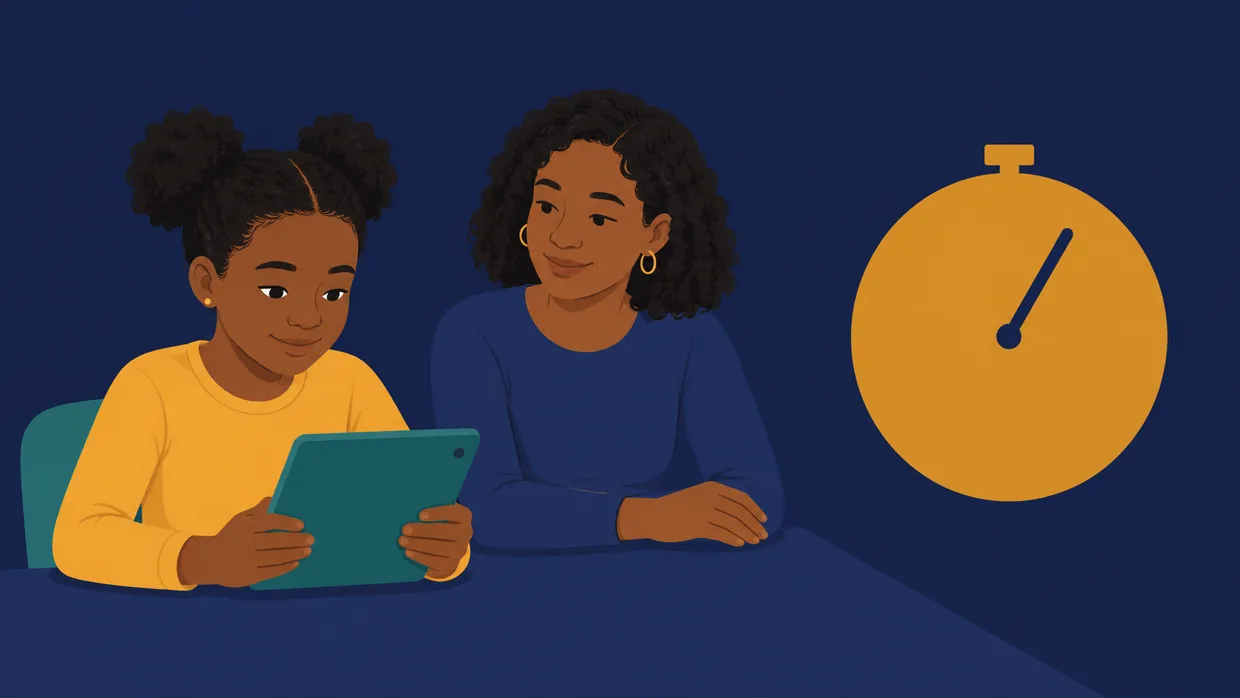
A child studying on a tablet beside a parent, with a large stopwatch on the wall behind them.

Three drills, and each one works differently

Vocabulary needs volume. Math facts need speed. Analogies need pattern recognition. Treating all three the same is why most study apps only move one of them.

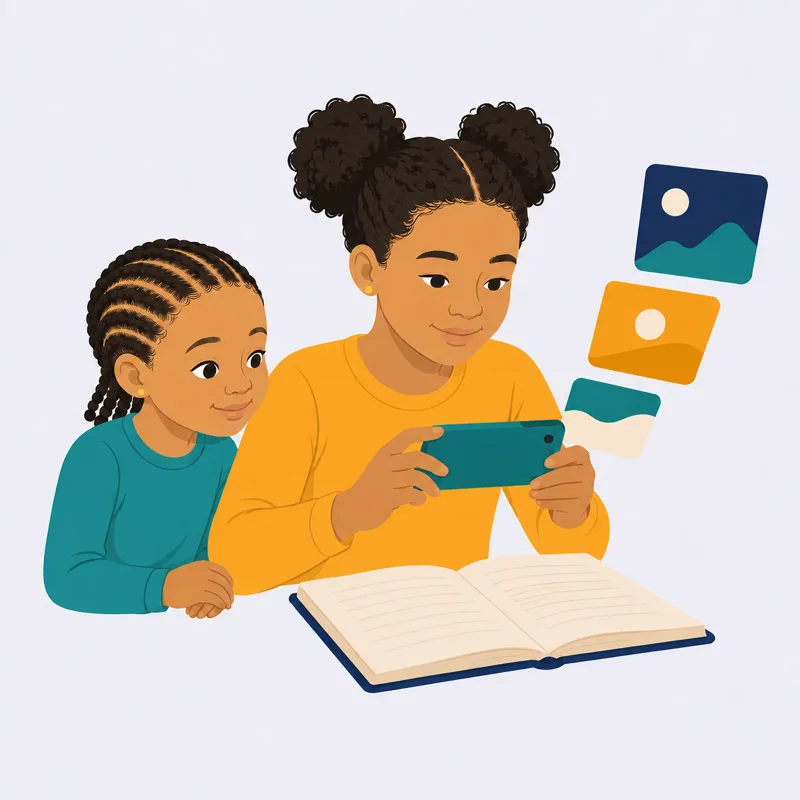
Two children at a table photographing an open book with a phone, with study cards lifting off the page.
01

Cards from their own work

Photograph a word list, a page of notes, or a marked-up practice test. You get draft cards to review before anything reaches your child. The richest source is their own mistakes: every word missed, and every wrong option they could not rule out.

02

Math facts against a clock

A correct answer in 2.1 seconds counts as retrieval. The same answer in 3.0 seconds counts as arithmetic, and the fact stays in rotation. The threshold tightens automatically as they get faster, and that curve is the clearest progress measure the app produces.

03

Analogies and synonyms

Verbal reasoning sections lean heavily on analogies, which is pattern recognition rather than vocabulary. The drill teaches twelve relationship types and shows the bridge sentence after every answer. Synonyms get drilled in the five-option format the tests actually use.

The same right answer, twice

This is the whole idea. On a timed section with no calculator, the second one costs your child the question after it.

7 × 8
2.1sRetrieved. Moves toward automatic.
3.0sWorked out. Stays in rotation.

A first session takes about ten minutes to set up

Most of that is you reviewing cards, which is the part that keeps a wrong fact from being memorised as confidently as a right one.

1

Import a list

Upload a CSV or paste a link to a shared sheet. Column mapping takes a few seconds, and it is remembered for next time.

2

Seed the math facts

Times tables, addition, subtraction, and division are generated exactly, so no arithmetic in this app was ever written by a language model.

3

Review the drafts

Everything about to be created, sorted worst-first with the questionable ones flagged and explained. Approve in bulk, fix inline, or throw out.

4

Hand over the tablet

Your child gets their own login and sees only their study screens. Fifteen minutes of cards and a ninety-second sprint is a full day.

The honest parts

Worth knowing before you sign up, including the ones that count against it.

Whether it fits

This suits a particular kind of household. Reading the right-hand column and recognising yourself is a useful outcome.

Good fit

  • Your child is studying toward something specific
  • You will spend five minutes a week reviewing cards
  • Fifteen minutes a day is realistic in your house
  • You want study data you can hand to a tutor

Poor fit

  • You want your child using it unsupervised from day one
  • You want points, badges, and streaks
  • You need it to teach reading comprehension or essay writing
  • You want polished software with a support team

Questions

Why no streaks or points?
Streaks work by manufacturing loss aversion, and over a long stretch a missed day hands a child a reason to stop. The app produces real rewards instead. A fact going automatic is a true statement about what your child can now do, and it lands harder than an invented number.
Does my child need their own device?
It runs in a browser on a tablet, a phone, or a laptop, and installs to the home screen. Your child has their own login. You have yours, and the two see completely different things.
What does it cost?
Nothing. If you add an API key for photo capture, Anthropic bills you directly for what you use, which for a normal family is a few dollars a month. The app shows you the running total.
Which exams does it suit?
The verbal drills are built around the middle-level independent school admissions tests, and the vocabulary and analogy work transfers across most of them. Everything else is general: any subject, any word list, any set of facts.
Can both parents use it?
Yes. Invite a co-parent by email and you both get full access. They set their own password, and either of you can add material or check progress.
What happens to the data if we stop?
Export the decks to an Anki-ready file, export the full record as JSON, then delete the account. Deletion removes the rows rather than hiding them.

Start with one deck

Import a word list, seed the times tables, and let them run fifteen minutes tomorrow morning. That is the whole first day.

Two minutes. No card required, because there is nothing to pay for.